What to Do With an Inherited Home You Don’t Want
Inherited a home you don’t want? Learn your legal, financial, and emotional options — from disclaiming to selling — with expert estate transition support.
5/26/20252 min read

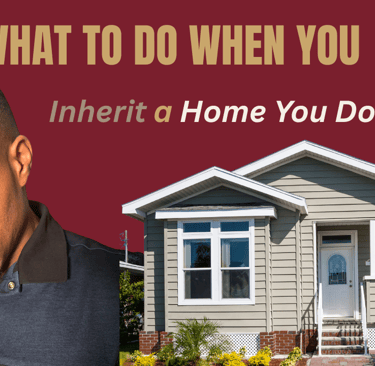
Options, clarity, and peace of mind — even when the gift feels like a burden.
Inheriting a home isn’t always the blessing people expect.
Sometimes, it’s across the country. Sometimes, it’s in probate limbo. And sometimes, it’s more than you can handle emotionally or financially.
If you’ve found yourself thinking, “I don’t want this house — now what?” — you’re not alone. Many families face this exact dilemma. The good news is, you do have options.
Here are three smart, stress-reducing steps to help you move forward with confidence.
1. Pause Before You Act — Even If You’re Sure You Don’t Want It
When an inheritance shows up uninvited, the first instinct is often to move fast — to clean it out, offload it, or just be done. But moving too quickly can create costly legal and financial missteps.
Start with these basics:
Is the home still in probate? If so, you may not yet have the legal authority to act.
Who is the executor or personal representative? Connect with them and the estate attorney.
What’s the status of the mortgage, taxes, insurance, and utilities?
Are there any liens, debts, or financial obligations attached to the home?
Important: If you act too soon — like selling belongings, making repairs, or listing the home — you could run into probate complications or conflicts with other heirs.
2. Check the Contents — There Might Be More Value Than You Think
Even if the house itself isn’t something you want, what’s inside might surprise you.
Inherited homes often hold valuable (and often overlooked) assets, such as:
Antiques or vintage tools that are collectible
Jewelry, art, or coins that need appraisal
High-quality furniture or appliances that still hold resale value
Before you donate, dump, or do a full clean-out, consider bringing in an estate solutions professional to inventory what’s there. A well-run estate sale can help offset costs and reduce the emotional labor on your shoulders.
You don’t have to do this alone — and you shouldn’t have to guess what’s valuable.
3. Know Your Legal and Financial Options
Once you’ve taken stock, you’ll need to decide what to do with the property. Here are the most common paths:
Sell the home — either traditionally or “as-is”
Rent it out — for passive income (if you’re up for the responsibility)
Transfer it — to another heir or family member
Disclaim it — legally refuse the inheritance
That last one is important: Yes, you can say no to an inherited home — especially if it’s upside-down financially. It’s called “disclaiming” the inheritance, and it must be done in writing and on a short timeline. An attorney can help you do it correctly.
If you do decide to sell, make sure you work with someone who understands:
Probate timelines and court approval processes
How to handle clean-outs, disclosures, and estate-specific repairs
Coordination with co-heirs, attorneys, or absentee family members
With the right partner, even a difficult handoff can turn into a smooth transition.
Feeling Stuck? Let’s Find the Right Next Step — Together.
Whether you’re ready to sell, planning to walk away, or just don’t know where to start — there’s help. You don’t have to figure it all out alone, and you don’t have to decide everything today.
Download our free guide to inherited property decisions
Set up a free consultation—just an easy conversation about your next steps.
We’re here to make it easier — one step at a time.
[Privacy Policy] [Terms of Use]
360Estate Solutions – Transition Support & Licensed Realtor
Serving Columbus, Westerville, Gahanna, Blacklick, Pickerington, Reynoldsburg, Dublin, Powell, Hilliard & 30‑mile radius.
Call (614) 499-5185 | Dak@360EstateSolutions.com
Home | Process | Pricing | Estate Guides